![[my] Wellness project](/assets/logos/my-wellness-project-bright-white.svg)

You've probably heard lavender helps with sleep. Maybe you've even tried it — a pillow spray, a scented candle, a reed diffuser. And maybe it didn't work.
Here's why: most lavender products aren't actually lavender. They're synthetic fragrance designed to smell like lavender. Real lavender essential oil works differently. When it's pure, and when you use it correctly, the research is clear: lavender can significantly improve sleep quality.
But there's more to the story — because while lavender oil helps, it's rarely enough on its own, especially if stress during the day is what's keeping you awake at night.
The science: what research shows.
Does lavender actually help you sleep?
Yes. Multiple peer-reviewed studies confirm it. A 2025 analysis of 11 clinical trials involving over 600 adults found lavender essential oil significantly improved sleep quality. The effect was consistent across different populations — from postmenopausal women with insomnia to cardiac patients recovering from surgery.
Earlier research on women with sleep disorders showed lavender inhalation reduced the time it took to fall asleep, increased sleep efficiency, and even reduced symptoms of depression and anxiety that often accompany poor sleep. What makes these findings particularly credible is their consistency: whether researchers tested lavender on elderly patients, people with chronic diseases, or healthy adults, the results pointed in the same direction.
Why lavender works for sleep
Lavender essential oil contains natural compounds that influence your nervous system. When you inhale lavender's aroma, these compounds interact with receptors in your brain that regulate stress response and sleep–wake cycles. Traditionally used in Western herbal medicine to relieve sleeplessness and reduce symptoms of stress, lavender has even been called "the broom of the brain" in traditional medicine — a reference to its ability to clear the mental tension that prevents restful sleep.
Always read the label and follow the directions for use.
But here's what most people miss: the quality of lavender oil matters enormously. Pure lavender (Lavandula angustifolia) works differently than synthetic "lavender scent" or low-grade oils cut with additives. That's where CPTG® Certified Pure Tested Grade testing comes in — every batch of dōTERRA Lavender is tested to ensure it contains the right balance of naturally occurring compounds, with no fillers, synthetic ingredients, or contaminants. When research shows lavender works for sleep, this is the kind of lavender they're testing.
How to use lavender oil for sleep.
Method 1 — Diffusion (most effective)
Add 4–6 drops of lavender essential oil to a diffuser 30–60 minutes before bed. Let it run while you wind down, creating a calming environment that signals to your brain it's time to sleep. Inhalation is the most studied delivery method for lavender's sleep benefits. Common mistake: using lavender only in the bedroom — try diffusing in your living area during your evening routine to start the wind-down earlier.
Method 2 — Topical application
Apply Lavender Touch Roll-On to the bottoms of your feet, back of your neck, or pulse points before bed — the pre-diluted formula is ready to use. For a more concentrated application as you get into bed, use the Lavender Peace Stick + Valerian. Best areas:
- Bottoms of the feet — thick skin absorbs well.
- Back of the neck — close to the brain stem.
- Temples — if tension affects your sleep.
- Wrists — you'll smell it as you adjust position through the night.
Method 3 — Internal use
Lavender Peace Softgels combine lavender essential oil with other calming botanicals in a convenient capsule. They're ARTG-listed (ARTG 489563), traditionally used in Western herbal medicine to decrease sleeplessness and support a healthy stress response in the body. Only use essential oils internally when they're specifically formulated and labelled for internal use — never ingest oils that aren't.
Always read the label and follow the directions for use.
Don't use synthetic lavender. Don't use expired or heat-damaged oils. And don't expect instant results — some people notice a difference the first night, others need 2–3 weeks of consistent use.
Why single oils aren't enough.
Here's what most sleep advice misses: poor sleep usually starts during the day. If you're stressed or overwhelmed during waking hours, your nervous system stays in "fight or flight" mode even after you lie down. Lavender at bedtime might help you feel calmer, but it's working against 14 hours of accumulated stress. You're trying to fix a night-time problem that actually started at breakfast.
dōTERRA's Lavender Peace Restful Blend combines lavender with other calming oils — cedarwood, ho wood, ylang ylang, marjoram, Roman chamomile, vetiver, vanilla, and Hawaiian sandalwood — each contributing aromatic properties that work together for a more comprehensive calming effect than lavender alone. Lavender is excellent; but a symphony is more powerful than a solo instrument.
The most effective approach addresses sleep from multiple angles: manage stress during the day, signal your body in the evening, create optimal conditions at bedtime, and support rest through the night. That's where the Sleep Well Pack comes in.
The complete solution: the Sleep Well Pack.
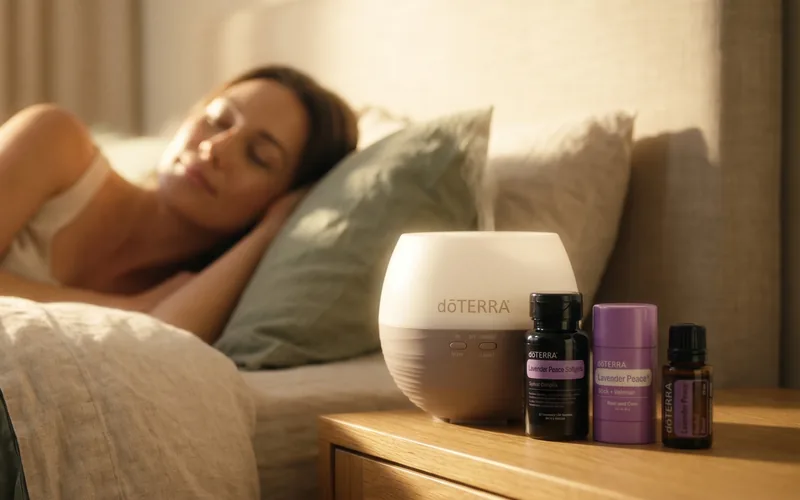
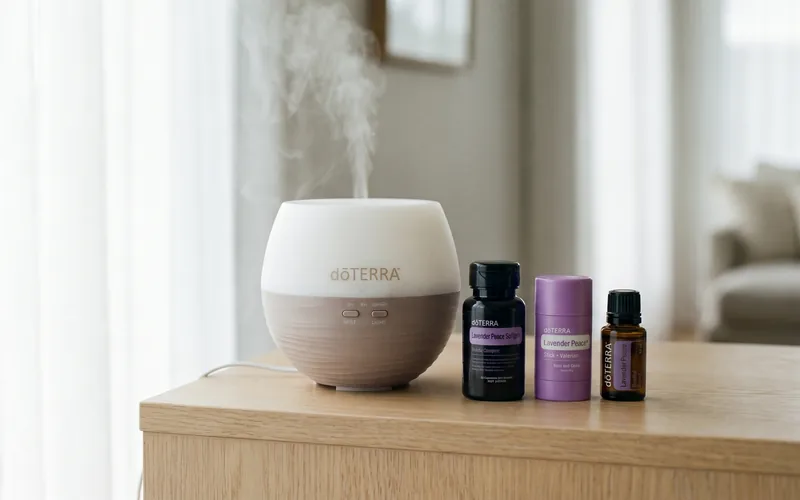
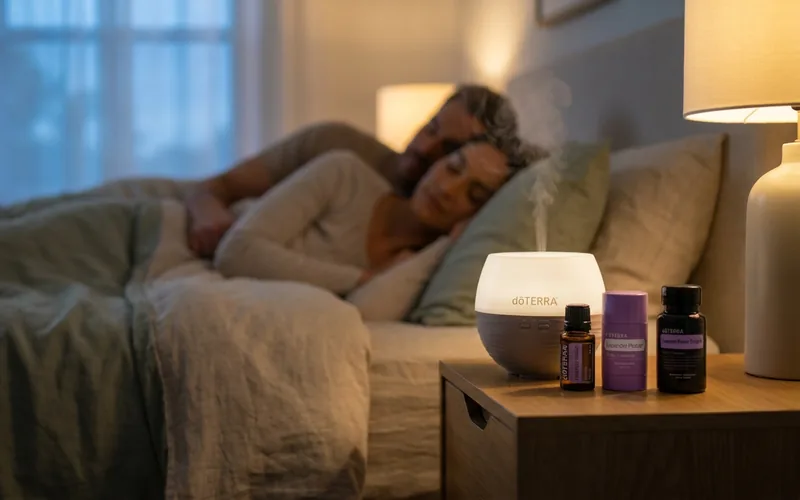
Most people try lavender alone and wonder why it doesn't solve their sleep problems. If you're dealing with chronic sleep issues, you need more than one tool. The Sleep Well Pack brings together four products that work across different touchpoints, plus the diffuser to run them:
- Lavender Peace Softgels — CPTG® lavender with L-theanine, tart cherry, lemon balm, passionflower, and chamomile. Traditionally used in Western herbal medicine to decrease, reduce, and relieve sleeplessness.
- Lavender Peace Stick + Valerian — the Restful Blend plus valerian in a convenient stick; a soothing, calming aroma applied topically as you settle in.
- Lavender Peace Restful Blend — a nine-oil aromatherapy blend that fills the bedroom with a warm, floral, herbal aroma.
- Lavender Touch Roll-On — pre-diluted lavender for pulse points through the day; traditionally used in aromatherapy to reduce symptoms of stress.
- Petal Diffuser 2.0 — ultrasonic diffusion with timer settings and soft ambient lighting.
The 4-step sleep protocol
- Softgels, 30 minutes before bed — preparing your body for rest from the inside out.
- Stick, as you get into bed — concentrated topical aromatherapy at the transition from wakefulness to sleep.
- Diffuse through the night — 3–4 drops of the Restful Blend for a calming environment.
- Lavender Touch through the day — apply when tension builds, managing stress as it happens rather than undoing it all at bedtime.
Most people only address one or two steps — but sleep problems are rarely that simple. You need internal support, environmental factors, and daily stress management all working together. That's what a complete system looks like.
dōTERRA Lavender Peace Softgels (ARTG 489563) are listed with the TGA. Always read the label and follow the directions for use.
Frequently asked questions.
Does lavender essential oil really help you sleep?
Yes. Multiple peer-reviewed clinical studies confirm that lavender essential oil significantly improves sleep quality. A 2025 analysis of 11 trials involving over 600 adults found consistent improvements in sleep onset time, sleep efficiency, and overall quality. The key is using pure, therapeutic-grade lavender (Lavandula angustifolia) — not synthetic fragrances or low-quality oils.
How do I use lavender oil for sleep?
The most effective methods are diffusion (4–6 drops 30–60 minutes before bed — the most studied), topical application (roll-on or stick on pulse points, temples, and the back of the neck), and internal use (the ARTG-listed Lavender Peace Softgels). Consistency matters — use it as part of your routine for 2–3 weeks.
Where should I put lavender oil for sleep?
The bottoms of the feet (thick skin absorbs well), the back of the neck (close to the brain stem), the wrists and pulse points, and the temples (if tension affects your sleep). For aromatic use, diffuse in your bedroom 30–60 minutes before sleep.
Is lavender oil good for sleep?
Yes — it's one of the most well-researched natural sleep aids, traditionally used in Western herbal medicine to relieve sleeplessness and reduce symptoms of stress. Research consistently shows improvements in both how well people feel they slept and objective measures like sleep onset latency and sleep efficiency.
Which lavender essential oil is best for sleep?
Pure Lavandula angustifolia (true lavender) that's CPTG® certified — ensuring no synthetic additives or fillers, the correct balance of naturally occurring compounds, and no contaminants. Different species like lavandin or spike lavender have different chemical profiles and may not offer the same sleep-supporting properties.
How does lavender help you sleep?
Lavender contains natural compounds (like linalool and linalyl acetate) that interact with receptors in the brain regulating stress response and sleep–wake cycles. Inhaled or applied topically, they influence your nervous system, helping transition from "fight or flight" into the parasympathetic state needed for quality sleep.
Can I use lavender oil for my baby's sleep?
Always consult a paediatrician first — children's systems are more sensitive than adults'. If approved, heavily dilute and apply to the bottoms of the feet only, or diffuse at very low concentration. Never apply undiluted oils to children under 6, and never use internally unless directed by a healthcare professional. For children, good sleep hygiene and routines should always come first.
How long does it take for lavender to work for sleep?
It varies — some notice easier sleep onset the first night, others need 2–3 weeks of consistent use. Use it as part of a regular routine, combine it with good sleep hygiene, address daytime stress, and consider a complete protocol rather than lavender alone. If there's no improvement after 3–4 weeks, consider a medical evaluation.
References & research.
The sleep-enhancing effects of lavender described above are supported by peer-reviewed clinical research:
- Liu, Y., et al. (2025). "The Sleep-Enhancing Effect of Lavender Essential Oil in Adults: A Systematic Review and Meta-Analysis." Holistic Nursing Practice. 11 RCTs, 628 participants; significant improvement in sleep quality (P=.005). View study
- Li, X., et al. (2025). "A systematic review and meta-analysis of clinical trials on lavender for sleep disorders in older adults." Sleep Medicine. Significant improvement in sleep quality (SMD −1.20). View study
- Luo, J., & Jiang, W. (2022). "A critical review on clinical evidence of the efficacy of lavender in sleep disorders." Phytotherapy Research, 36(6), 2342–2351. View study
- Lucena, L., et al. (2023). "Effect of a lavender essential oil and sleep hygiene protocol on insomnia in postmenopausal women." Explore (NY), 20(1), 116–125. View study
- Dos Reis Lucena, L., et al. (2021). "Lavender essential oil on postmenopausal women with insomnia: double-blind randomized trial." Complementary Therapies in Medicine, 59, 102726. View study
- Wang, Y., et al. (2024). "Effects of aromatherapy on sleep quality in older adults: a meta-analysis." Medicine, 103(49). Lavender particularly effective (SMD −1.39). View study
These studies represent the current body of peer-reviewed research supporting lavender's traditional use in Western herbal medicine to relieve sleeplessness and reduce symptoms of stress. Last updated January 2026.