![[my] Wellness project](assets/logos/my-wellness-project-bright-white.svg)
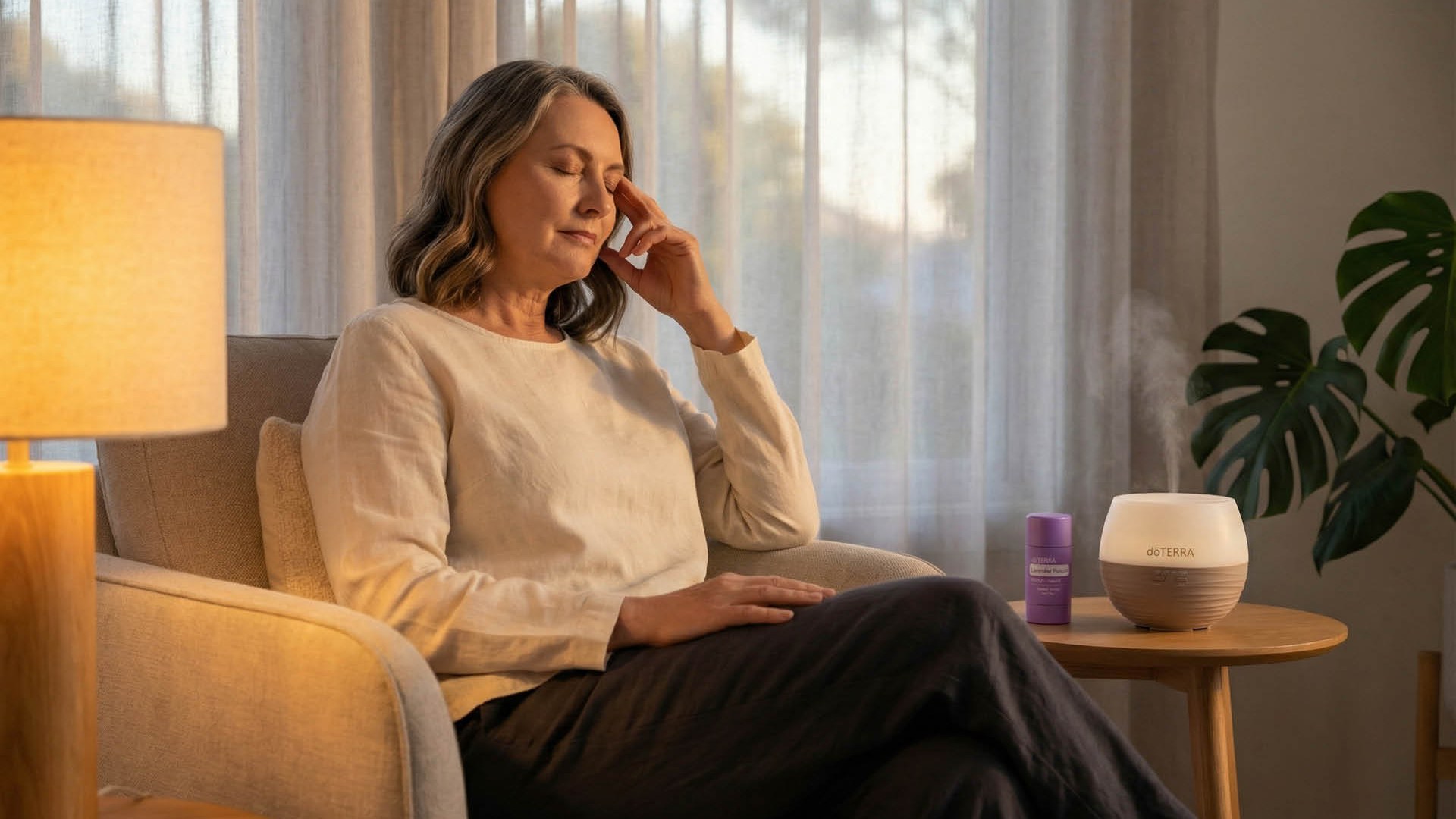
If you've ever bought a bottle of lavender on a recommendation, used it twice, and watched it gather dust — you're not alone. Essential oils can genuinely help you sleep, but only when you understand which ones to reach for and how to use them. This is the clear version.
In this guide
Why essential oils help you sleep The best essential oils for sleep How to use essential oils for sleep Why a system beats a single oil Common questionsWhy essential oils help you sleep
Smell is the only sense wired directly to the brain's emotional core. When you inhale an aroma, those scent molecules travel straight to the limbic system — the region that governs emotion, memory and the body's automatic wind-down responses. That's why a familiar smell can shift how you feel in seconds, not minutes.
Sleep isn't a switch you flip; it's a process your nervous system eases into. The hour before bed is where that process either begins smoothly or gets interrupted before it starts. A calming aroma, used at the same time each night, gives your body a clear, repeatable signal: the day is done.
Over time that signal becomes conditioned. The scent stops being merely pleasant and starts acting as a trigger for rest — the same way the smell of coffee can wake you up. Consistency is what does the work.
The best essential oils for sleep
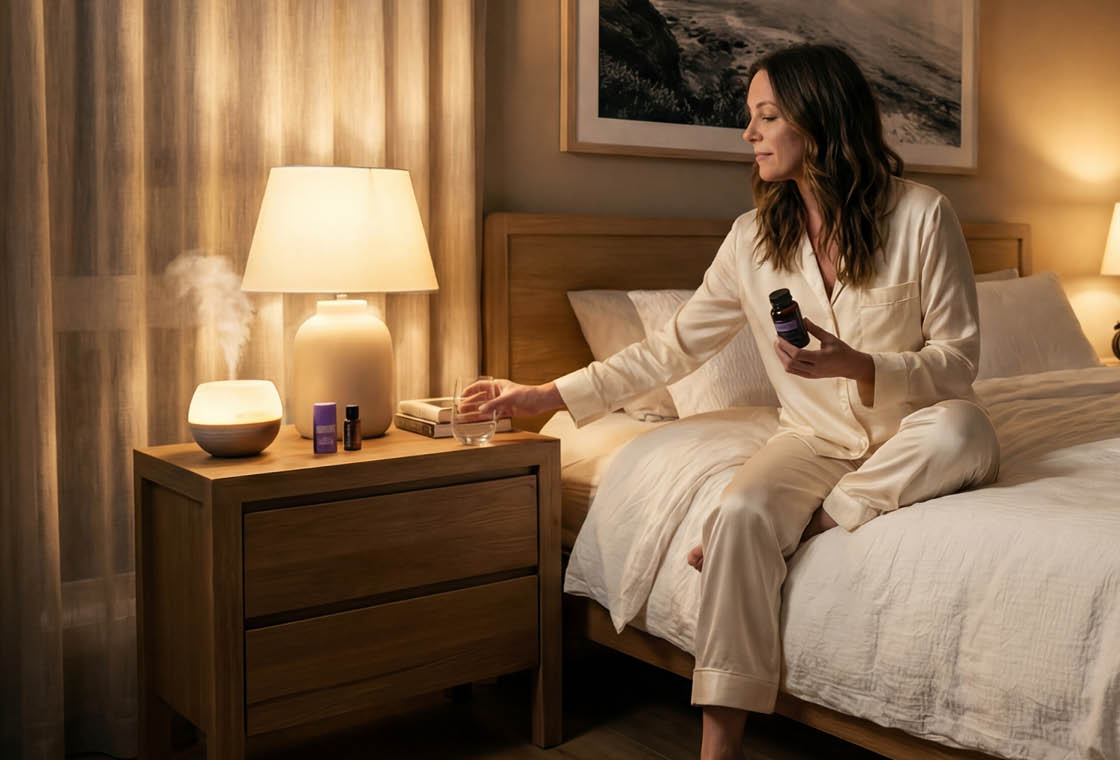
A handful of oils have been used for generations to create a calming bedtime atmosphere. These are the ones worth knowing.
Lavender
The gentle, obvious place to start — soft, floral, and the most widely used sleep oil there is. If you try one oil for sleep, make it this. Read the full guide to lavender oil for sleep →
Valerian
Warm, earthy and deeply grounding — valerian has been used since ancient Greek and Roman times to support rest. Its heavier aroma is ideal for quieting a racing mind.
Roman chamomile
Soft, apple-sweet and reassuring. A classic calming aroma that pairs beautifully with lavender for a layered, settling blend.
Cedarwood
Woody and warm. Cedarwood brings a grounded, forest-floor quality that helps create a peaceful sleep environment.
Vetiver & ylang ylang
Vetiver is rich and smoky-sweet; ylang ylang is floral and exotic. Both add depth to a sleep blend and are traditionally used to encourage calm.
How to use essential oils for sleep
The oil matters less than the method. The most effective approach uses three pathways together, every night, so the routine itself becomes the cue.
1. Aromatically — diffuse
Add a few drops to a diffuser about thirty minutes before bed. This fills the room and is the most direct route to the limbic system. A diffuser like the Petal Diffuser 2.0 makes this effortless and consistent.
2. Topically — apply
Roll or massage a diluted oil onto your wrists, the back of your neck, and the soles of your feet. You carry the aroma with you into bed, and the act of applying it becomes part of the ritual.
3. Internally — where listed
Some products are formulated and listed for internal use. dōTERRA Lavender Peace Softgels (ARTG 489563) are listed with the TGA as traditionally used in Western herbal medicine. Only ever ingest products specifically labelled for it, and always read the label and follow the directions for use.
Why a system beats a single oil
Here's the thing most people miss: a single bottle, used now and then, can't build a habit. What changes your sleep is the same sequence of calming cues, repeated nightly, until your nervous system learns to recognise them.
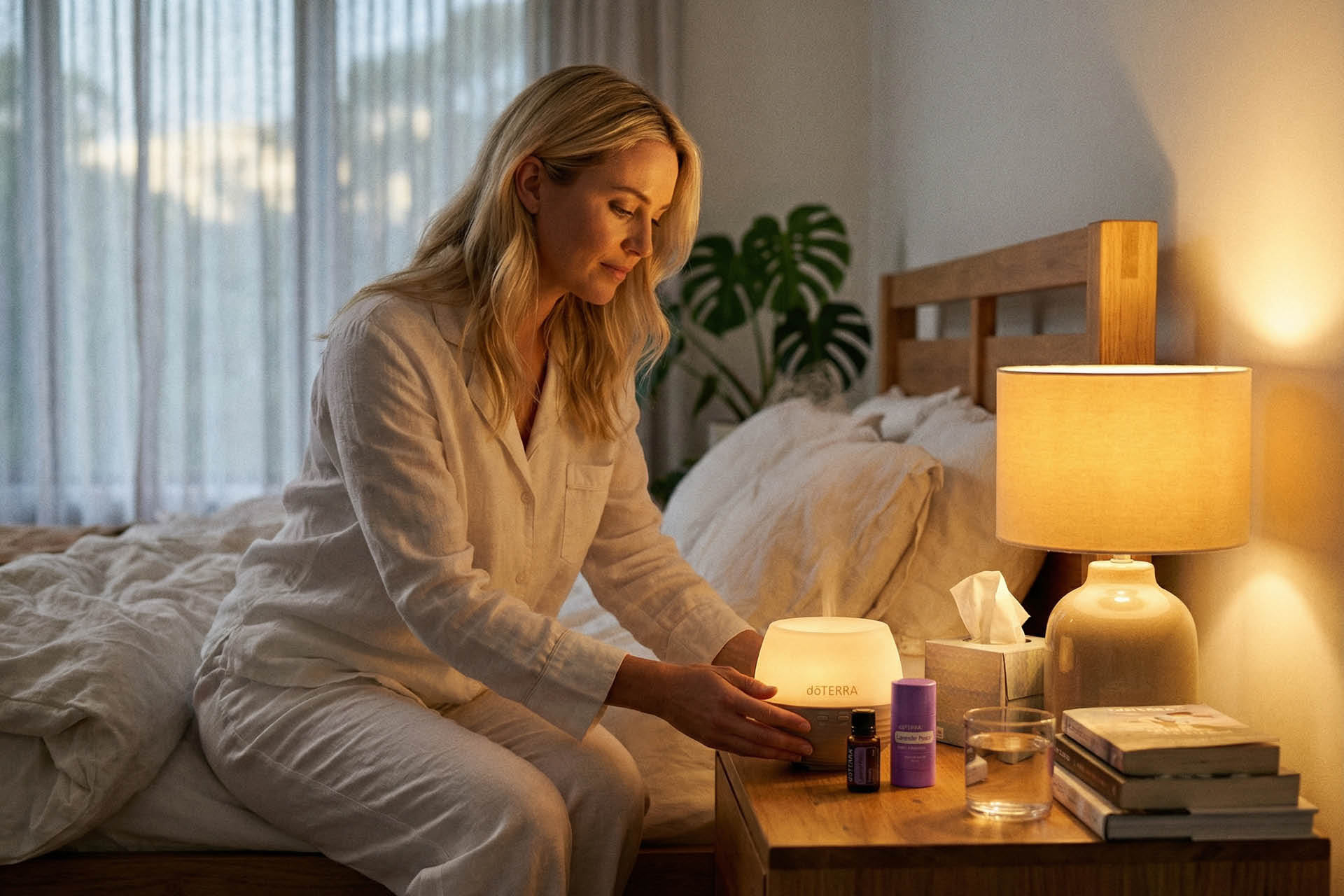
That's why the most effective approach isn't one oil — it's a small, complete set used as a ritual across all three pathways. Diffuse, apply, rest. Same order, same time, every night.
The Sleep Well Pack.
Five dōTERRA products — aromatic, topical and internal — packaged with a simple 3-step evening ritual. Everything you need, in one order.