![[my] Wellness project](/assets/logos/my-wellness-project-bright-white.svg)

You already know essential oils can support sleep. The question isn't whether they work — it's how to use them effectively.
Most people start with diffusion because it's the easiest entry point: a few drops of lavender in the bedroom diffuser, then they wait for results. When sleep doesn't improve consistently, they wonder what went wrong.
Here's the insight that changes everything: single-method approaches leave gaps. If you only diffuse, you create a calming environment but do nothing for your body's internal stress response. If you only apply oils topically, the concentrated aroma fades within hours. If you only take supplements, you miss the environmental and ritual components that anchor better sleep. The most effective approach combines three evidence-based methods — ingestion, topical application, and diffusion — each serving a different purpose.
The three ways to use essential oils for sleep.
- Ingestion (Therapeutic Wellness products) — ARTG-listed supplements that combine essential oils with complementary botanicals for internal support. Traditionally used in Western herbal medicine to decrease, reduce, and relieve sleeplessness. Only use products specifically formulated and approved for internal use — never ingest neat essential oils.
- Topical application (targeted aromatherapy) — oils applied to the skin with proper dilution, delivering concentrated aroma at pulse points, the back of the neck, chest, and the bottoms of the feet. Lavender is traditionally used in aromatherapy to reduce symptoms of stress.
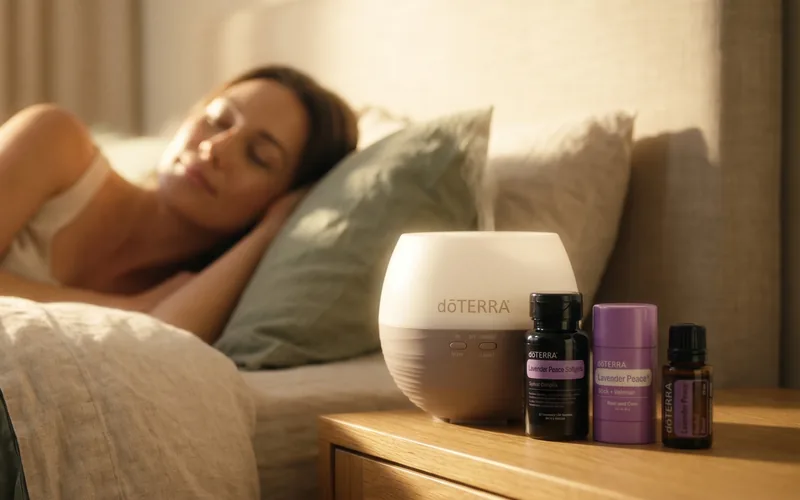
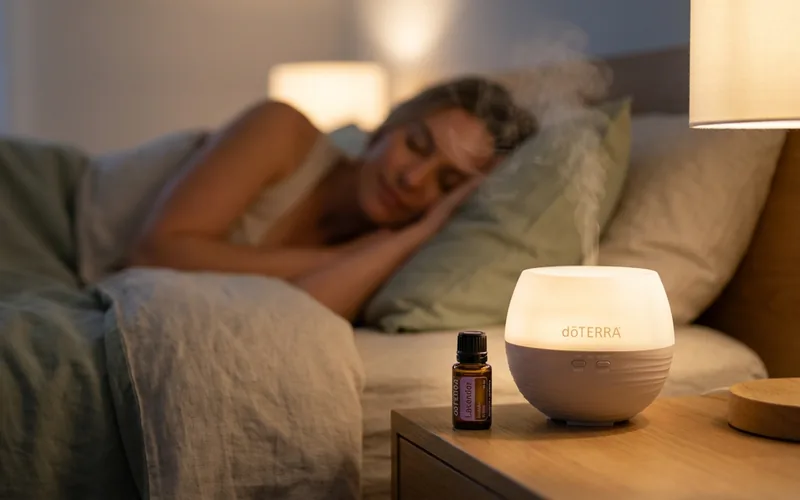
- Diffusion (environmental aromatherapy) — an ultrasonic diffuser disperses oils as a fine mist, creating a calming atmosphere throughout the bedroom all night.
Method 1: Ingestion — internal therapeutic support.
Therapeutic Wellness supplements combine CPTG® essential oils with botanicals in formulations designed for safe internal use, and require ARTG approval. Lavender Peace Softgels (ARTG 489563) combine CPTG® lavender with L-theanine, tart cherry, lemon balm, passionflower, and chamomile — traditionally used in Western herbal medicine to decrease, reduce, and relieve sleeplessness. Unlike sleep tablets that suppress the central nervous system and leave you groggy, they work from the inside out without creating dependency.
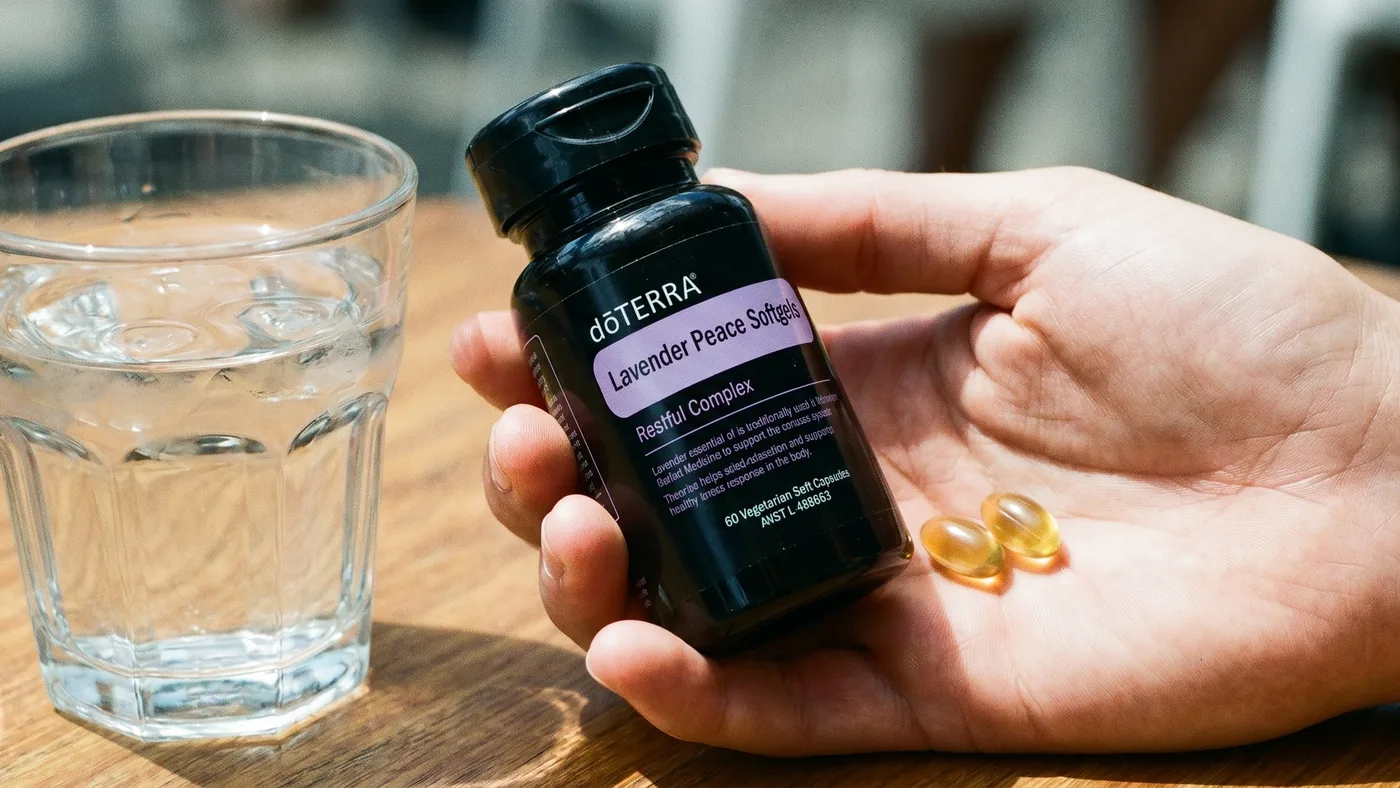
- Adults: take 1–2 softgels with water 30 minutes before bed. Consistent nightly use is best — most people notice improved patterns within 7–14 days.
- Teens (13–17): consult your healthcare provider first; if approved, start with 1 softgel.
- Children (under 13): not recommended unless advised by a healthcare professional — focus on topical and diffusion methods instead.
This is the only application method with therapeutic claims for sleeplessness. Only use ARTG-listed products for ingestion, and not during pregnancy or nursing without medical advice. Always read the label and follow the directions for use.
Method 2: Topical application — targeted aromatherapy.
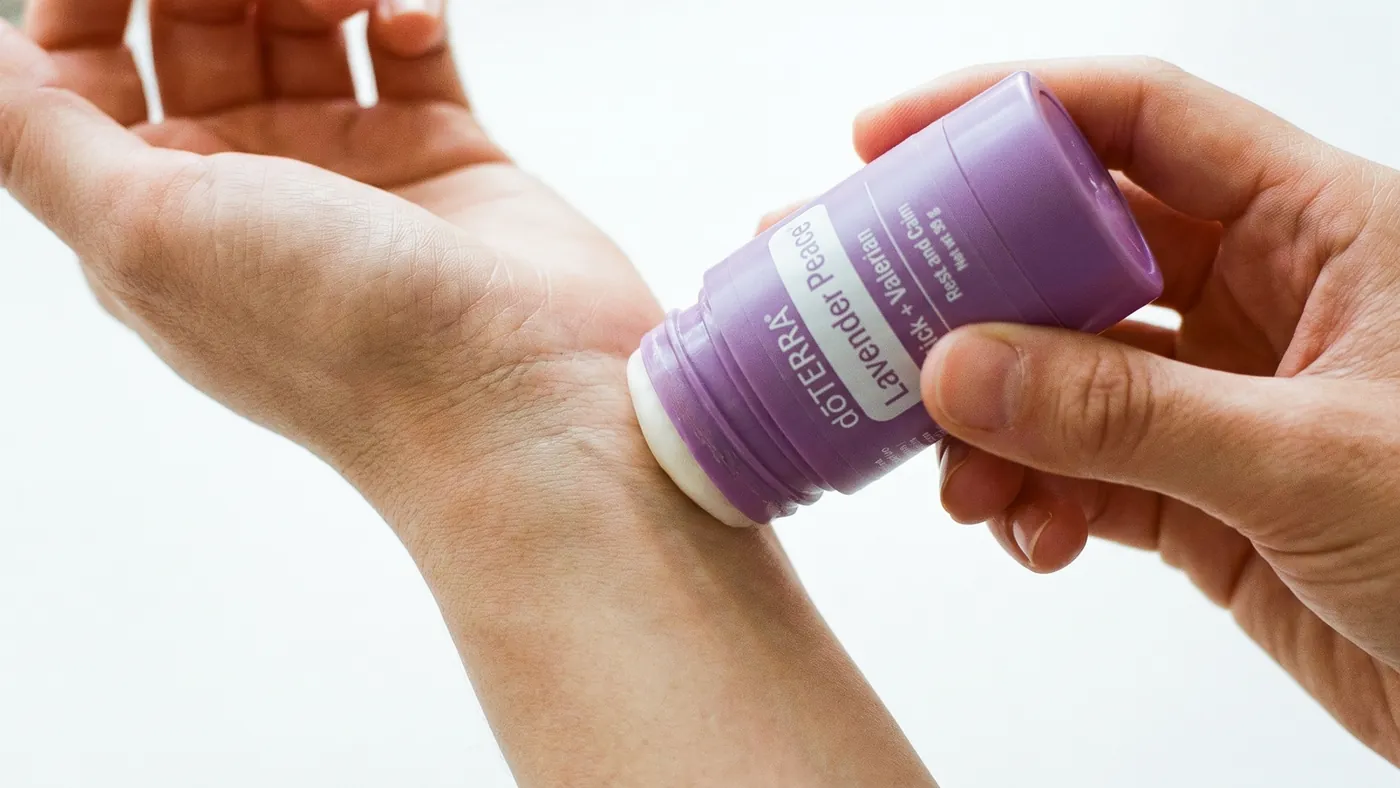
Applying oils to the skin (with proper dilution) delivers concentrated aromatherapy at specific points, working through both skin contact and inhalation — faster and more targeted than diffusion. Applying calming oils as you get into bed also creates an immediate sensory signal that it's time to relax.
Dilution
- Adults: use a pre-diluted roll-on (Lavender Touch), an aromatherapy stick (Lavender Peace Stick + Valerian), or DIY at 2–3 drops per 1 teaspoon of carrier oil (coconut, jojoba, sweet almond).
- Teens (13–17): same ratios, but test a smaller area first; pre-diluted products are recommended.
- Children (2–12): dilute further — 1 drop per 1 tablespoon of carrier oil, applied to the bottoms of the feet, with a patch test first. Consult a healthcare provider for under-2s.
Where and when to apply
For sleep: the inside of the wrists, the back of the neck, the chest, and the bottoms of the feet. For daytime stress: temples, pulse points, and the back of the neck. Apply 5–10 minutes before getting into bed as a transition ritual; during the day, apply whenever stress builds, to interrupt the cycle before it compounds.
Never apply neat oils to skin unless a product is already pre-diluted. Avoid eyes, inner ears, and broken skin. If irritation occurs, dilute with carrier oil — not water. Some oils cause photosensitivity, so avoid direct sun after application.
Method 3: Diffusion — creating the right environment.
An ultrasonic diffuser breaks oil molecules into a fine mist, creating an ambient aromatherapy atmosphere that lasts hours — so you're surrounded by calming aroma all night, not just for the first hour after a topical application.
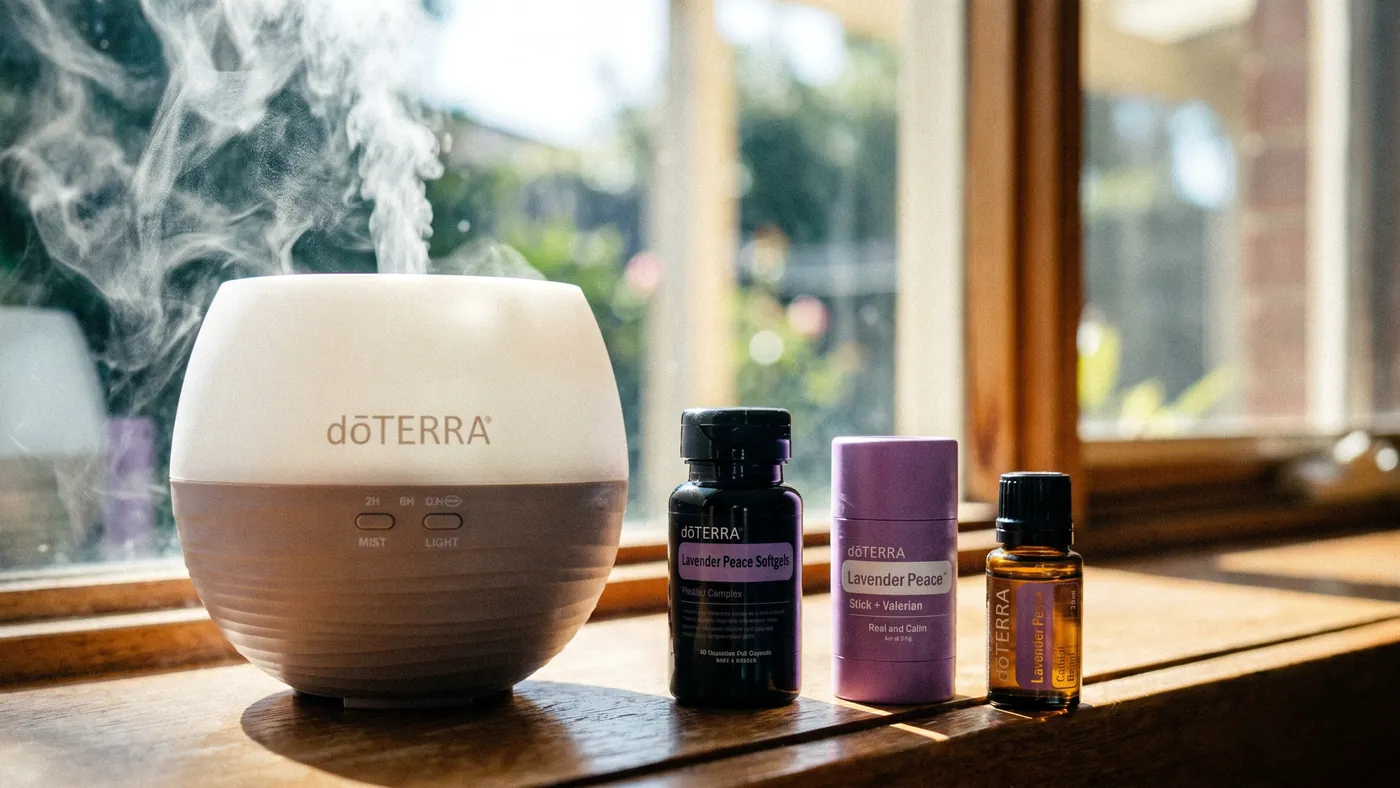
- Adults & teens: 3–4 drops for a standard bedroom (12–15 m²), 5–6 for larger rooms. Run continuously or on an intermittent setting (30 on / 30 off) to prevent olfactory fatigue.
- Children's rooms: ages 2–5 use only 1 drop (or diffuse outside the room with the door ajar); ages 6–12 can tolerate 2–3 drops. Diffuse 30–60 minutes before bed, then turn off — never all night.
Best for diffusion: single oils like lavender, cedarwood, Roman chamomile, and vetiver — or a pre-formulated blend like the Lavender Peace Restful Blend (lavender, cedarwood, ho wood, ylang ylang, marjoram, Roman chamomile, vetiver, vanilla, Hawaiian sandalwood), whose researched ratios remove the guesswork. Start the diffuser 15–30 minutes before entering the room, and clean it weekly.
How the three methods work together.
Single-method approaches leave gaps. Here's the complete system in practice:
- Through the day — topical roll-on whenever stress builds. Prevention, not reaction.
- 30 minutes before bed — 1–2 Lavender Peace Softgels with water, and start the diffuser with 3–4 drops of the Restful Blend.
- As you get into bed — apply the aromatherapy stick to wrists, neck, chest, and feet for an immediate transition ritual.
- Through the night — the diffuser maintains the calming environment while the internal support works.
Ingestion provides the therapeutic foundation, topical application delivers both the night-time transition and daytime stress management, and diffusion creates the ambient environment. Research shows multi-modal approaches outperform single applications because they address the complexity of what disrupts sleep in the first place.
What to expect.
- First night: you'll notice the calming aroma immediately and likely feel more relaxed during your routine. Actual sleep improvement on night one varies — oils support your natural sleep processes, they don't force sedation.
- First week: your body begins associating the aroma with your sleep routine, and daytime topical use prevents evening tension building.
- After 2–3 weeks: the routine anchors — your body starts relaxing as soon as it encounters the familiar aroma, and internal support reaches steady effectiveness.
Essential oils support sleep; they're not pharmaceutical sedatives. If severe sleep problems persist after several weeks, consult your healthcare provider — chronic disruption can indicate underlying issues.
Common mistakes.
- Using too much — an overpowering aroma can be stimulating rather than calming. Start with the recommended amounts.
- Inconsistent use — reaching for oils only once sleep is disrupted is reactive; they work best as a consistent routine.
- Wrong dilution — neat oils can irritate; over-diluting is ineffective. Use pre-diluted products or the ratios above.
- Expecting pharmaceutical results — give your body 1–2 weeks; ritual consistency matters as much as the product.
- Single method only — diffusion alone is often insufficient for stress-related sleep issues.
- Skipping quality checks — synthetic or adulterated oils won't deliver. Look for CPTG® Certified Pure Tested Grade or equivalent third-party testing.
One system, all three methods.
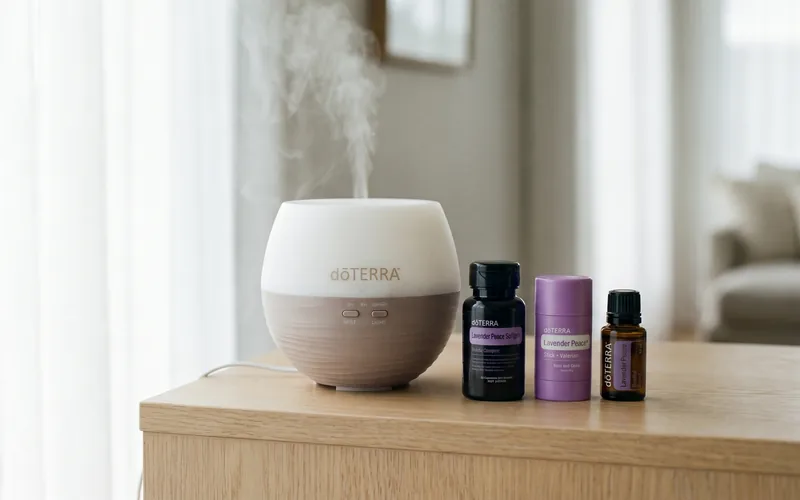
You now understand the three methods — but implementing them means sourcing ARTG-approved supplements, pure oils, and the right blends (often from multiple suppliers), calculating dilution ratios, and weeks of trial and error. The Sleep Well Pack solves exactly that: Lavender Peace Softgels (ARTG 489563) for ingestion, Lavender Touch Roll-On (includes Lavender Essential Oil ARTG 370657) and the Lavender Peace Stick + Valerian for topical use, the Lavender Peace Restful Blend for diffusion, and the Petal Diffuser 2.0 — pre-diluted, professionally formulated, with a clear 4-step protocol. One system, all three methods, nothing to figure out.
ARTG-listed products meet Australian regulatory standards, and every essential oil undergoes CPTG® testing. Always read the label and follow the directions for use.
Common questions about using essential oils for sleep.
Can I use essential oils for sleep if I'm taking prescription medications?
If you're currently taking prescription sleep medications, consult your healthcare provider before making changes to your routine. Your doctor can advise whether combining approaches is appropriate for your situation.
How long do essential oils last on skin after topical application?
Aromatic benefits typically last 2–4 hours depending on the area, oil type, and your body chemistry. Combining topical application with diffusion creates longer-lasting support — the topical delivers concentrated aroma for the transition, the diffuser maintains the environment through the night.
Is it safe to diffuse essential oils all night?
For adults and teens, yes — with appropriate amounts (3–4 drops for a standard bedroom). For children's rooms, diffuse 30–60 minutes before bed then turn off, or use lower amounts with the diffuser outside the room. Intermittent settings also work well.
Can pregnant or nursing mothers use essential oils for sleep?
Some essential oils are not recommended during pregnancy or nursing. Always consult your healthcare provider before using any essential oil products if you're pregnant, nursing, or planning to become pregnant.
What if I don't have a diffuser?
You can still use ingestion (softgels) and topical methods effectively. For ambient aroma without a diffuser, place 1–2 drops on a cotton ball near (but not touching) your pillow — though it's less effective than proper diffusion.
Can I use food-grade essential oils instead of aromatherapy oils?
Only use products specifically formulated and approved for internal use — meaning ARTG-listed therapeutic wellness products. "Food grade" labelling doesn't guarantee safety or effectiveness for internal therapeutic use. For topical and diffusion, use pure oils verified through CPTG® or equivalent testing.
How do I know if I'm using too much essential oil?
Signs of overuse include headache, nausea, skin irritation, or an overwhelming aroma. Reduce the amount by half and increase ventilation. For topical application, dilute further with carrier oil rather than washing with water.
Can I mix different essential oils together for sleep?
Yes, but effective blending requires understanding aromatic chemistry and safety profiles. Pre-formulated blends like Lavender Peace Restful Blend use researched ratios, giving you optimal synergy without the trial and error.