A mum laughing with her two young children in a warm, sunlit Australian living room, a dōTERRA Petal Diffuser misting on the side table
Therapeutic Wellness About dōTERRA · Regulatory care

TGA & Therapeutic Wellness in Australia.

Why evidence-based claims — not marketing creativity — sit behind every therapeutic product we share.

What TGA regulation exists to do

Your protection against unsubstantiated claims.

The Therapeutic Goods Administration (TGA) is the Australian Government agency responsible for regulating medicines and medical devices — including the complementary medicines known as therapeutic goods.

TGA regulation exists to ensure that products making therapeutic claims about health benefits are evaluated for safety, quality, and evidence before they reach consumers. This framework protects you from unsubstantiated claims while ensuring access to products that meet defined standards. In Australia, only products listed on the Australian Register of Therapeutic Goods (ARTG) are permitted to make therapeutic claims about treating, preventing, or alleviating health conditions.

How TGA regulation works in practice

A registration and listing system.

Regulation operates through a system that governs what products can be sold and what claims can be made about them.

  1. 1

    ARTG registration or listing

    Therapeutic goods must be entered on the ARTG database before they can be supplied in Australia.

  2. 2

    Permitted claims framework

    Each ARTG entry specifies exactly which health claims are approved for that product based on available evidence.

  3. 3

    Label-led communication

    Marketing, packaging, and promotional materials must only make claims approved in the product's ARTG listing.

  4. 4

    Advertising compliance

    All public communication about therapeutic goods must comply with the Therapeutic Goods Advertising Code.

  5. 5

    Australian Consumer Law alignment

    Claims must be accurate, substantiated, and not misleading under broader consumer protection legislation.

For clarity

What TGA regulation is — and is not.

What it is
  • A consumer protection system ensuring therapeutic products meet safety and quality standards before reaching the market.
  • An evidence requirement for health claims — products must demonstrate traditional use or scientific support.
  • A transparency mechanism — search any ARTG-listed product to see which claims are approved and which are not.
What it is not
  • Not product endorsement — ARTG listing confirms regulatory compliance; it is not a government recommendation.
  • Not a quality comparison — TGA regulation sets minimum standards; it does not rank products against each other.
  • Not permission for unsupported claims — even ARTG-listed products can only make the specific claims approved in their entry.
Why TGA regulation matters to you

Substantiated products, not industry noise.

The wellness industry is crowded with products making bold promises. Without TGA oversight, any company could claim their product "supports immune function," "relieves stress," or "improves sleep" — with zero evidence requirement and zero accountability.

When a dōTERRA product is ARTG-listed:

  • The claims are evidence-based — backed by traditional use evidence or scientific studies.
  • The formulation is standardised — you know which active ingredients are present and at what concentrations.
  • The manufacturing is audited — facilities must meet Good Manufacturing Practice (GMP) standards.
  • The labelling is transparent — search the ARTG number to confirm exactly which claims are approved.
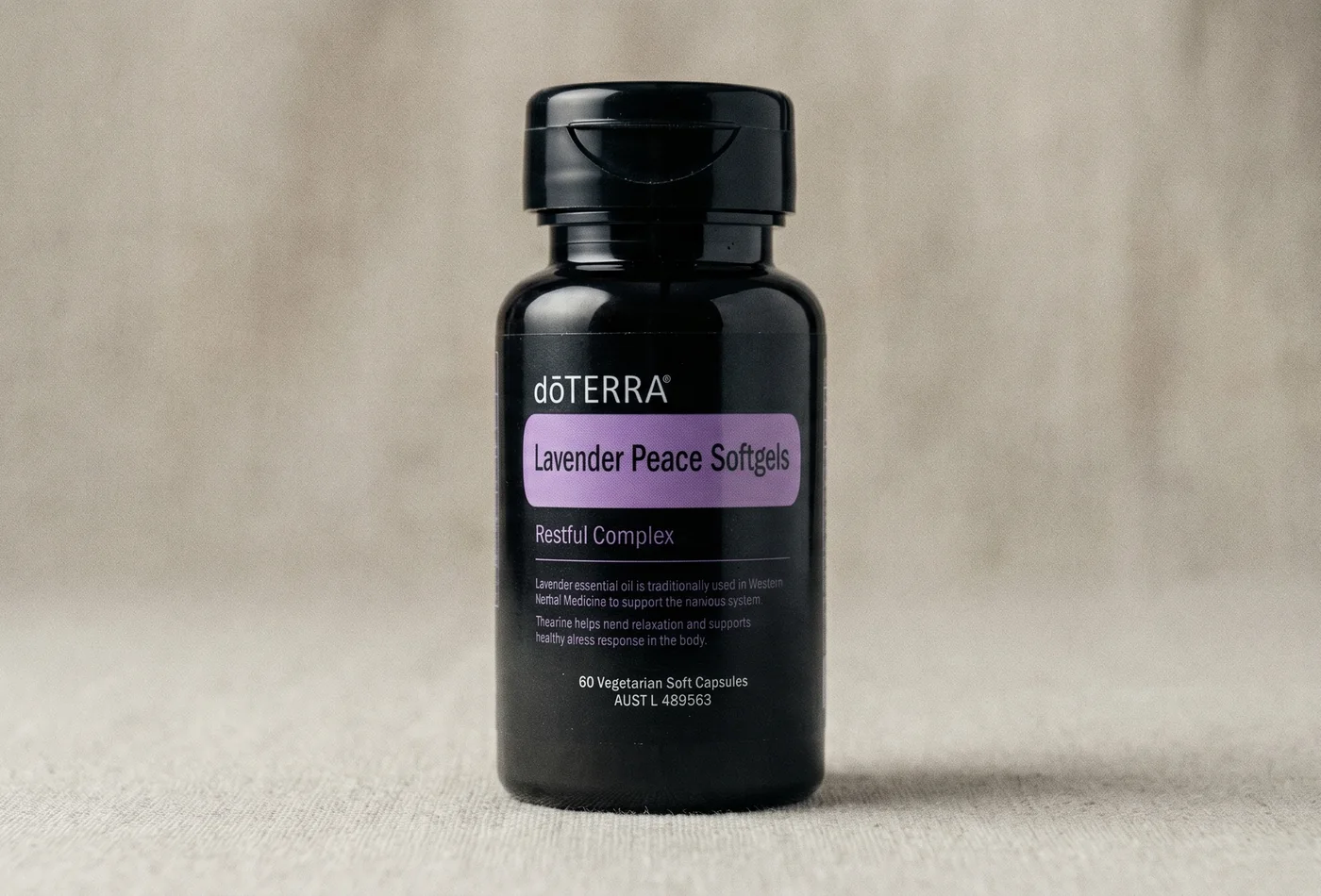
dōTERRA Lavender Peace Softgels bottle showing its ARTG listing number, AUST L 489563, on the label
Understanding the range

Two distinct product categories.

Not all dōTERRA products are ARTG-listed. The company offers two categories in Australia — and we use different language for each, because TGA regulation requires it.

ARTG-listed Therapeutic Wellness products

These carry an ARTG number and are permitted to make therapeutic claims based on traditional use or scientific evidence.

Lavender Essential Oil (ARTG 370657)
Traditionally used in Western herbal medicine to relieve sleeplessness. Traditionally used in aromatherapy to reduce symptoms of stress.

Lavender Peace Softgels (ARTG 489563)
Traditionally used in Western herbal medicine to relieve sleeplessness. Support a healthy stress response in the body.

With these products, we can make the therapeutic claims approved in their ARTG listings — and only those claims.

Non-ARTG aromatherapy products

These are not registered on the ARTG and cannot make therapeutic claims about health outcomes.

Lavender Peace Restful Blend
No ARTG listing — can describe aromatic properties only. Cannot claim it "supports sleep" or "relieves anxiety."

Lavender Peace Touch Roll-On
No ARTG listing — can describe application experience only. Cannot claim body effects or health outcomes.

With these products, we can describe their aroma, application methods, and the atmosphere they create — but not their impact on health or wellbeing.

How we communicate compliantly

We only make claims approved in a product's ARTG listing.

For ARTG-listed products
  • Approved therapeutic language: "Lavender essential oil is traditionally used in Western herbal medicine to relieve sleeplessness."
  • Include the disclaimer: "Always read the label and follow the directions for use."
  • No expanding beyond approved claims — e.g. not "supports immune function" (not approved for Lavender), and never "cures insomnia."
For non-ARTG aromatherapy products
  • Describe aromatic properties: "Creates a calming, restful atmosphere." "Warm, floral aroma with herbal undertones."
  • Share application methods: "Apply to pulse points before bed." "Diffuse 4–6 drops 30 minutes before sleep."
  • No therapeutic claims — not "helps you fall asleep faster" or "reduces anxiety."
How this relates to My Wellness Project

Honest communication, by design.

My Wellness Project operates within TGA compliance requirements because regulatory adherence protects you and ensures honest communication. ARTG-listed products feature the therapeutic claims approved by TGA — no exaggeration, no unsupported promises. Non-ARTG products are presented with accurate aromatic descriptions and application guidance — no misleading health claims.

What this means for your wellness choices

The Sleep Well Pack includes both ARTG-listed therapeutic products (Lavender essential oil, Lavender Peace Softgels) and non-ARTG aromatherapy products (Lavender Peace Restful Blend, Touch Roll-On). You'll see different language used for each category because TGA regulation requires it — and that precision protects your ability to make informed decisions.

Verify it yourself

Where to find more information.

Always read the label and follow the directions for use.

← Back to About dōTERRA