![[my] Wellness project](/assets/logos/my-wellness-project-bright-white.svg)

When adult sleep challenges require adult solutions — evidence-based approaches that address stress, hormones, and modern life.
The sleep disruption you're experiencing at 40 didn't exist when you were 15. Back then, your nervous system downshifted naturally and stress was temporary. Now? The hypervigilance that makes you excellent at your job won't release at night — the financial decisions, the team you're leading, the aging parents, the teenagers. Every responsibility accumulates through the day, and by 10pm you're attempting to reverse 14 hours of physiological tension in a 30-minute wind-down. It's an impossible task — which is why you need an adult approach to sleep.
Why adult sleep problems are different.
Adult sleep disruption has different sources than childhood sleep problems. Work stress compounds daily. Financial pressure creates persistent nervous-system activation. Caregiving (for children or aging parents) means your brain never fully disengages. For women, perimenopause and menopause disrupt sleep architecture; for men, declining testosterone affects sleep quality and recovery.
This is the hypervigilance problem high-functioning adults know intimately: the same stress response that serves you in high-stakes moments won't disengage when you lie down. Your shoulders carry tension from the commute; your jaw stays clenched from difficult conversations; the mental load intensifies hourly. Children's remedies — warm milk, bedtime stories — don't address accumulated adult stress. The patterns are entrenched, the stakes are higher, and the solutions need to match the complexity of the problem.
What qualifies as a "natural" sleep remedy?
Natural doesn't mean passive — it means working with your body's systems. A natural sleep remedy is non-pharmaceutical and non-habit forming; it supports your body's existing sleep mechanisms rather than suppressing your central nervous system, and it's safe for long-term use without dependency or escalating doses. The categories: botanical supplements (lavender, valerian, passionflower, chamomile), aromatherapy and essential oils, lifestyle interventions (circadian support, daytime stress management, environment), and nutritional support.
A note on expectations: natural remedies require consistency. You're not looking for a pharmaceutical knockout — you're building sustainable sleep patterns over 7–14 days, addressing the cause (accumulated stress, nervous-system hyperactivation) rather than just suppressing the symptom. It takes a little longer to show results, but it creates lasting change without morning grogginess, cognitive impairment, or dependency risk.
Evidence-based natural sleep remedies.
Therapeutic botanicals
The most effective botanical remedies carry ARTG listing — assessed by the TGA and approved for specific therapeutic claims. Lavender essential oil (ARTG 370657) is traditionally used in Western herbal medicine to relieve sleeplessness, and in aromatherapy to reduce symptoms of stress. dōTERRA Lavender Peace Softgels (ARTG 489563) combine CPTG® lavender with L-theanine, tart cherry, lemon balm, passionflower, and chamomile — traditionally used in Western herbal medicine to decrease, reduce, and relieve sleeplessness, supporting a healthy stress response without grogginess. Supporting botanicals include valerian root, passionflower, lemon balm, and chamomile; modern additions like L-theanine support calm focus while tart cherry provides natural melatonin precursors. Quality matters — therapeutic-grade products use consistent dosing, and CPTG® certification ensures purity without synthetic additives.
Always read the label and follow the directions for use.
Aromatherapy and essential oils
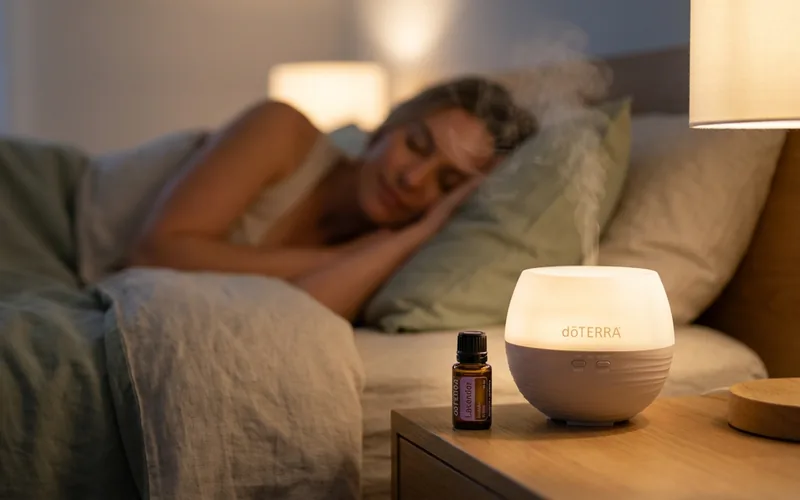
Aromatic compounds work differently than oral supplements: when you inhale essential oils, the molecules interact directly with your limbic system — the brain's centre for emotion, memory, and stress response — a faster pathway to nervous-system regulation. Diffusion creates a sustained environmental effect; topical application (properly diluted) delivers concentrated aromatherapy at pulse points, temples, chest, and the bottoms of the feet; a combined approach gives you both. Researched blends outperform single oils — the Lavender Peace Restful Blend combines lavender, cedarwood, ho wood, ylang ylang, marjoram, Roman chamomile, vetiver, vanilla, and Hawaiian sandalwood for comprehensive support.
Lifestyle foundations
No supplement or oil can override poor sleep hygiene. Get morning sunlight (15–30 minutes within an hour of waking) and keep consistent sleep/wake timing, even on weekends. Manage daytime stress as it builds (a portable roll-on lets you interrupt tension before meetings or difficult conversations), so your night-time routine isn't trying to undo a whole day at once. Optimise the environment — 18–20°C, complete darkness, and a bedroom reserved for sleep — and evaluate your mattress and pillows (adults in their 40s and 50s need different support than at 25).
What doesn't work (and what to avoid).
- Melatonin addresses circadian disruption, not stress-induced sleeplessness — it tells your body what time it is, but doesn't calm a racing mind (and most people take it too late, in too high a dose).
- Generic sleep teas are typically under-dosed, with inconsistent quality — you'd need several cups to match a proper botanical supplement.
- OTC sleep aids (antihistamines) suppress the central nervous system: morning grogginess, cognitive fog, potential dependency.
- Alcohol makes you drowsy but disrupts REM sleep, so you wake unrefreshed even after 8 hours.
- DIY essential-oil blending requires expertise — dilution ratios matter, some oils are too stimulating at night, and some combinations cancel each other out.
- Magnesium helps some people (especially with a deficiency) but isn't a complete solution for stress-driven adult sleep problems.
Why single remedies rarely solve adult sleep problems.
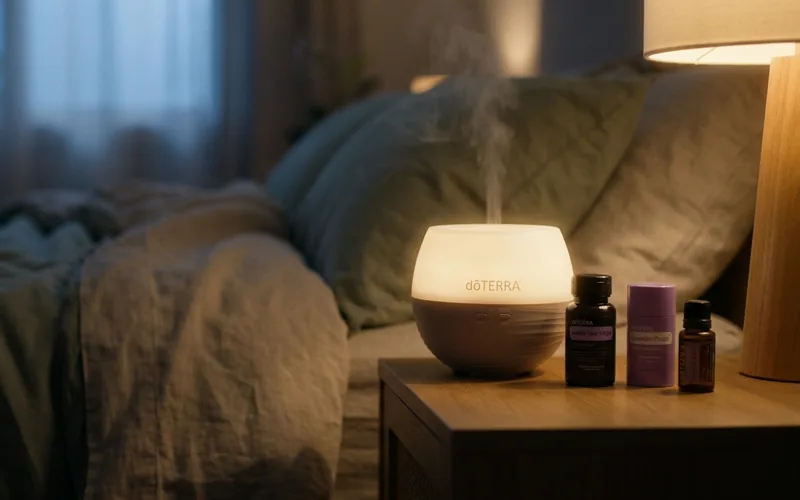
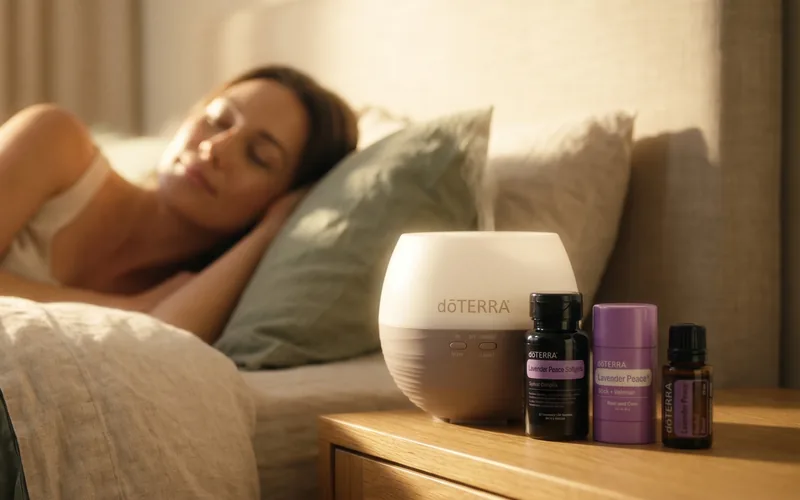
Adult sleep disruption is multi-factorial: accumulated daytime stress, bedroom environment, a nervous system that won't downshift, circadian disruption, hormonal changes, and an hourly-intensifying mental load. A single supplement addresses one factor; a diffuser another. You need them working together — internal therapeutic support, environmental aromatherapy, topical application at key pressure points, and daytime stress prevention. That's why complete systems work better than individual products: you're addressing all the factors at once rather than guessing which matters most. The Sleep Well Pack combines therapeutic wellness products with aromatherapy across four daily touchpoints — internal softgels, overnight diffusion, bedtime topical application, and a daytime roll-on.
How to use natural sleep remedies effectively.
- Consistency over intensity — commit to 7–14 days minimum before evaluating; you're establishing new patterns, not forcing instant drowsiness.
- Timing strategy — start with daytime stress management (a lavender roll-on through the day), then add the evening protocol (diffusion, topical, internal support 30 minutes before bed). Layer over time rather than starting everything at once.
- Dosing and application — with oils, more isn't better; dilute properly for topical use and follow label directions for supplements. Increasing the dose doesn't accelerate results.
- Track multiple metrics — not just time to fall asleep, but morning energy, subjective sleep quality, and how well you manage daytime stress.
Your questions answered.
Are natural sleep remedies safe for long-term use?
Yes, when properly formulated. ARTG-listed products like dōTERRA Lavender essential oil (ARTG 370657) and Lavender Peace Softgels (ARTG 489563) meet Australian therapeutic standards for ongoing use as directed. Unlike pharmaceutical sleep aids that can create dependency, botanical and aromatherapy approaches work with your body's natural systems without building tolerance. Consult your healthcare provider if you have specific concerns or are pregnant or nursing.
How quickly will I notice results?
Individual experiences vary. Many people feel more relaxed within the first few uses, particularly with aromatherapy. Therapeutic botanicals typically require 7–14 days of consistent use to establish sustainable patterns — a gradual approach that builds habits and retrains your nervous system rather than forcing artificial drowsiness.
Can I use natural remedies if I'm taking prescription sleep medication?
Consult your healthcare provider before combining natural remedies with prescription medications. Natural products can interact with pharmaceuticals, and your doctor may want to adjust timing or dosing. Many people successfully transition from prescription sleep aids to natural approaches under medical supervision.
What's the difference between ARTG-listed and regular supplements?
ARTG (Australian Register of Therapeutic Goods) listing means a product has been assessed by the TGA and approved for specific therapeutic claims — so it can legally state it is "traditionally used in Western herbal medicine to relieve sleeplessness." Regular supplements without ARTG listing cannot make these therapeutic claims.
Do I need to use multiple remedies or can one work alone?
Adult sleep problems are rarely single-cause — work stress, hormonal changes, nervous-system hypervigilance, environment, and circadian disruption all compound. A complete system addressing multiple factors at once delivers better results than any single remedy alone.